


How to Import Handheld Ultrasound from China: MOQ, Certificates and Shipping
- 2026-11-02
- 39
- Guangzhou Sonostar Technologies Co., Limited
Most import problems are not caused by the device. They are caused by doing the steps in the wrong order: a buyer negotiates price and MOQ first, then discovers the device cannot be registered in their country, or that the shipment is held at customs for missing battery documentation. This guide lays out the order that avoids those surprises.
1. Start with market access, not price
Before discussing cost, confirm what your national regulator requires. A device that cannot be registered cannot be imported for resale, regardless of how good the commercial terms are.
| Market | Typical requirement | What to request from the supplier |
|---|---|---|
| United States | FDA clearance before commercial distribution | FDA 510(k) clearance number; establishment registration |
| European Union | CE marking under EU MDR | CE certificate (MDR), EU Declaration of Conformity, authorised representative details |
| Latin America, Middle East, Asia | Often accepts existing FDA or CE as part of local registration | Certificate of Free Sale (CFS) issued in the country of manufacture, plus ISO 13485 |
| China domestic | NMPA registration | NMPA registration certificate if you intend to sell in China |
Many markets in Latin America, the Middle East, and Southeast Asia accept a manufacturer's existing FDA clearance or CE marking as supporting evidence for local registration. If you sell into one of those markets, ask which pathway applies before placing an order — it determines which certificates matter most.
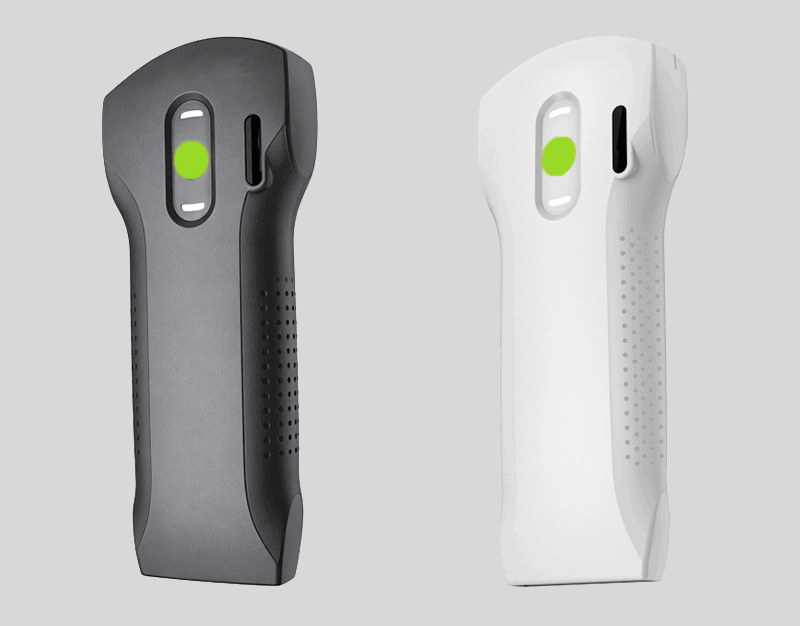
2. Certificates and documents to request
A credible manufacturer should be able to provide the following without hesitation:
ISO 13485 — quality management system certificate for medical devices. This is the baseline.
CE certificate under EU MDR or FDA 510(k) clearance number — verifiable, not just a logo on a brochure.
Declaration of Conformity listing the specific model numbers you are buying.
Certificate of Free Sale — required by many importing countries.
UN38.3 test summary and MSDS for the lithium battery — required for air freight.
Commercial invoice, packing list, and HS classification — ultrasonic scanning apparatus is commonly classified under HS 9018.12, but confirm the exact code with your customs broker, as it varies by country and configuration.
3. MOQ: what actually drives it
Minimum order quantity is usually lower than buyers expect, and it varies by configuration rather than by company policy:
In-stock standard models — single-unit samples and small trial orders are typically workable. This is the sensible way to start: evaluate one or two units in your clinical setting before committing.
Multi-configuration orders — if you need several probe types (for example convex, linear and three-in-one combined probes), MOQ is usually counted per configuration.
OEM customization — custom housing colour, private-label branding, packaging, or software changes require production setup, so MOQ is meaningfully higher. Wrap that conversation into your OEM and customization discussion rather than a standard order.
Always ask whether MOQ applies per model or per order, and whether a mixed order of different models counts toward it.

4. Payment terms and pricing structure
Incoterms matter more than unit price. Compare EXW, FOB and CIF quotes on the same basis — a low EXW price can end up more expensive once freight, insurance, and local handling are added.
Standard terms are typically a deposit with the balance before shipment (T/T), with letters of credit used for larger orders.
Ask what is included in the price: probes, charging accessories, carry case, software licences, spare batteries, warranty period, and clinical training material.
Confirm whether a recurring software fee exists. Some brands require an annual subscription for Doppler, cloud storage, or AI functions; others do not. This is a multi-year cost and should be clear before you sign. Our procurement selection guide covers this in more detail.
5. Shipping: the lithium battery is the constraint
Handheld ultrasound devices contain lithium batteries, which makes them regulated goods for air transport (UN3481 — batteries contained in equipment). Plan for:
Documentation — UN38.3 test summary and MSDS from the manufacturer.
A freight forwarder experienced with medical devices rather than a general cargo agent.
Transit time — air freight is faster (roughly a week door-to-door in many lanes, including clearance); sea freight is slower but more economical for consolidated orders.
Clearance buffer — customs holds are most often caused by incomplete registration paperwork or HS code mismatch, not by freight itself.
6. After-sales before you order
Two questions determine whether a direct-import relationship works long term:
Where does warranty service happen? Returning units internationally is slow and expensive. Ask whether board-level or module-level replacement is handled locally, and whether loaner units are available.
Are spare parts and batteries stocked? A user-replaceable battery is a practical advantage here — you can hold spares locally instead of shipping devices back.
7. Order of operations
Confirm registration pathway with your national regulator.
Request and independently verify certificates (ISO 13485, CE/FDA, CFS).
Order one or two evaluation units; test them in your actual clinical workflow.
Agree configuration, MOQ, Incoterms, and payment terms in writing.
Confirm what after-sales support and spare parts look like.
Collect UN38.3 + MSDS and confirm the HS code with your broker.
Book freight with a medical-device experienced forwarder.
Retain documentation for your local registration file.
SonoStar has manufactured wireless probe-type handheld ultrasound since 2011 and ships to more than 100 countries. Our export team can provide certificate documentation, configuration options, and shipping details for your destination.
View handheld ultrasound systems · Veterinary configurations · Certificates & compliance · Request documentation and a quotation
Disclaimer: This article provides general information about medical device importing and does not constitute legal, regulatory, or customs advice. Requirements vary by country and change over time — confirm current rules with your national regulator and a licensed customs broker before ordering.
- Pre:Why More Clinics and Hospitals Are Adopting Handheld Ultrasound
- Next:No more




 Home
 Product
 News
 Contact