


Is Wireless Probe Handheld Ultrasound Hard to Learn & Operate
- 2026-08-03
- 1106
- Guangzhou Sonostar Technologies Co., Limited
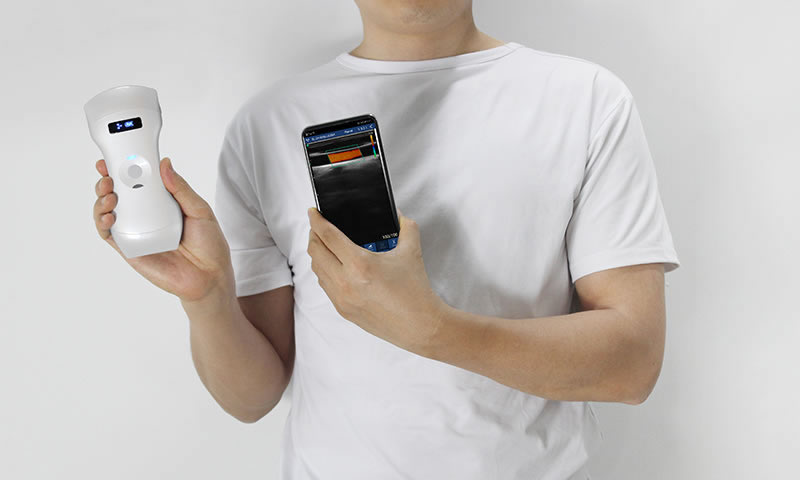
In clinical practice, conventional cart-based ultrasound systems feature cumbersome operation and a steep learning curve, restricted mainly to dedicated sonographers. Clinical departments such as the emergency department, ICU, and anesthesiology department struggle to conduct flexible point-of-care ultrasound (POCUS) examinations at patients’ bedsides. To resolve this widespread industry pain point, many manufacturers have developed lightweight wireless ultrasound devices with intelligent optimization to lower operational barriers. Sonostar boasts long-term technical accumulation and rich experience in handheld ultrasound R&D. Below we break down the learning difficulty of wireless probe handheld ultrasound based on device features, offering clear insights for medical procurement teams.
1. Core Drawbacks of Traditional Cart Ultrasound in Clinical Use
Conventional ultrasound systems come with an extremely high operational threshold. Their complex physical control panels and dozens of adjustable parameters require prolonged systematic training to master proficiently. Most non-sonography clinical staff only grasp basic theoretical knowledge but lack familiarity with parameter tuning and image interpretation skills. Even if departments are equipped with cart ultrasound machines, they cannot deliver rapid bedside scans to meet urgent clinical demands including emergency screening and puncture guidance.
2. Intelligent Design of Handheld Ultrasound Greatly Simplifies Operation
Compared with bulky cart systems, wireless probe handheld ultrasound’s biggest advantage lies in intelligent, user-friendly operation design. The device integrates an anatomy-scene intelligent matching system: clinicians only select the corresponding body part preset, and the scanner automatically calibrates optimal imaging parameters. Manual adjustment of gain, imaging depth, noise reduction and other professional settings is no longer required, operating as intuitively as auto-mode smartphone photography. This eliminates the core pain point of complicated parameter configuration.

3. Ultra-Simplified Workflow for Rapid Bedside Scanning
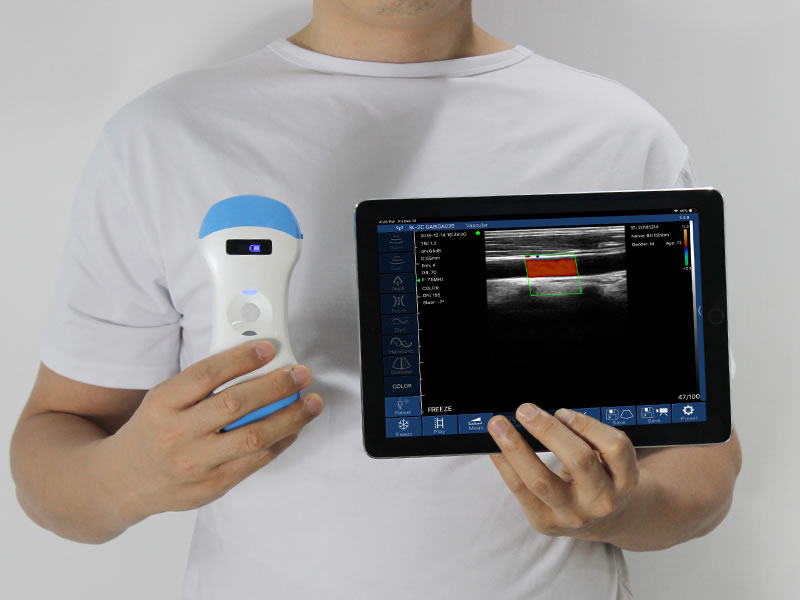
Wireless probe handheld ultrasound delivers a streamlined 3-step pre-scan workflow that can be completed within one minute: fit a disposable sterile probe cover, connect the probe to mobile smart terminals via Wi-Fi, and apply ultrasound coupling gel to capture real-time images. The learning barrier is extremely low. Clinical staff with zero ultrasound experience can independently complete basic clinical procedures including vascular localization, effusion screening, and nerve block guidance after brief simplified training.
4. Stable Imaging Quality Suits Most Routine Clinical Scenarios
Lightweight wireless ultrasound also meets standard clinical requirements in imaging stability and operational safety. Equipped with optimized digital imaging algorithms, it delivers clear enough images for basic screening of vascular structures, musculoskeletal tissue, and fluid effusion assessment. Furthermore, the cable-free wireless probe enables unrestricted multi-angle scanning, eliminating cross-contamination risks and movement limitations caused by tangled wires of traditional cart ultrasound. It adapts to rigorous scenarios such as intraoperative guidance and emergency bedside resuscitation.

5. Application Scope & Clinical Positioning of Handheld Wireless Ultrasound
This type of handheld scanner is widely deployed for rapid emergency screening, critical care bedside assessment, anesthetic puncture guidance, and primary care preliminary screening. It must be clarified that the device acts as an auxiliary screening tool for fast clinical assessment and procedural guidance. Diagnosis of complex lesions and evaluation of difficult clinical cases still rely on large professional cart-based color Doppler ultrasound operated by specialized radiologists.

Conclusion
Intelligent wireless handheld ultrasound breaks down the professional barriers of traditional ultrasound equipment. With simplified operation, consistent imaging performance and flexible mobility, it moves ultrasound scanning out of dedicated imaging rooms and becomes an efficient auxiliary diagnostic tool for all clinical departments.




 Home
Home Product
 News
News Contact