


What Practical Clinical Value Does Portable Doppler Ultrasound Bring to Primary Care Clinics?
- 2026-08-17
- 917
- Guangzhou Sonostar Technologies Co., Limited
Primary care clinics and community medical institutions undertake the core tasks of grassroots disease screening, chronic disease management, and daily outpatient diagnosis and treatment. However, most grassroots medical facilities are restricted by budget, site space and equipment configuration, lacking large-scale fixed ultrasound diagnostic equipment. For a long time, grassroots diagnosis has relied mainly on manual physical examination and empirical judgment, leading to limited accuracy of vascular and soft tissue assessment, missed early lesions, and excessive patient referrals to higher-level hospitals. As a lightweight POCUS (Point-of-Care Ultrasound) device, portable Doppler ultrasound effectively makes up for the equipment shortcomings of primary care scenarios. It supports non-invasive, real-time bedside blood flow detection, helping grassroots medical staff achieve visualized, standardized and efficient clinical diagnosis and treatment, and has become an essential auxiliary medical device for modern grassroots outpatient services.
This article is compiled by the technical team of [Brand], which has long been engaged in high-end medical device clinical popularization. Relying on rich practical experience in grassroots medical upgrading, community clinic standardized construction and mobile medical screening projects, this paper summarizes the core practical clinical value of portable Doppler ultrasound in primary outpatient scenarios, providing objective reference for grassroots medical equipment configuration and clinical application promotion.
1. Fill the Gap of Grassroots Vascular Screening Equipment
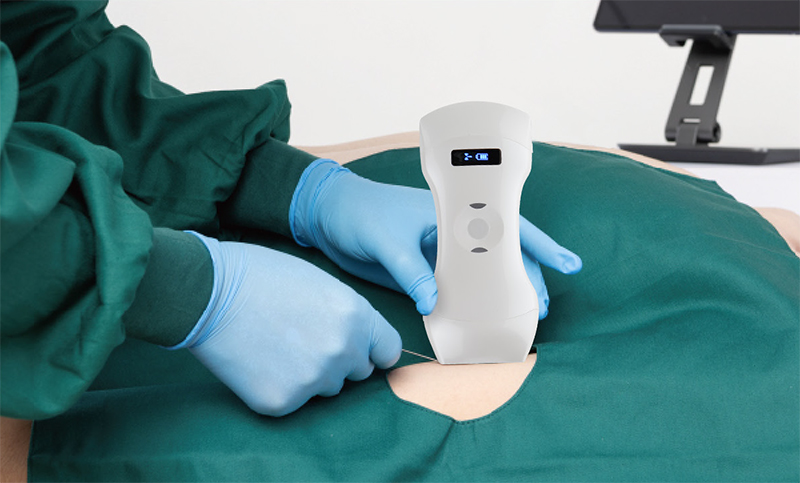
Most community clinics and township health centers cannot deploy expensive trolley-type color Doppler ultrasound systems due to cost and site constraints, resulting in long-term blank of professional vascular blood flow detection capabilities[4]. Portable Doppler ultrasound equipment features small size, light weight and low overall deployment cost, which meets the affordable and usable equipment configuration needs of grassroots medical institutions. Different from traditional palpation and empirical judgment, it can accurately identify vascular blood flow velocity, perfusion status and vascular patency, realizing quantitative assessment of peripheral vascular conditions. It solves the clinical dilemma of relying solely on manual experience for diagnosis in grassroots outpatient services, and effectively improves the basic diagnostic capacity of primary medical institutions.
2. Improve Early Screening Accuracy of Common Chronic Diseases
Chronic diseases such as diabetes, hypertension and hyperlipidemia are the key management objects of primary care clinics. Long-term chronic disease progression may cause peripheral vascular sclerosis, poor limb perfusion and microcirculation disorders, which are difficult to detect through routine physical examination[1]. Portable Doppler ultrasound can complete bedside limb vascular screening for chronic disease patients in outpatient visits, early warning of lower extremity arterial insufficiency, venous stasis and other potential problems, and provide objective imaging basis for early intervention and disease condition evaluation. It helps grassroots medical staff realize early screening, early judgment and early intervention of chronic disease complications, reducing the risk of severe vascular lesions caused by delayed diagnosis.

3. Optimize Outpatient Diagnosis Efficiency and Reduce Unnecessary Referrals
4. Support Home Visits and Mobile Medical Screening Services
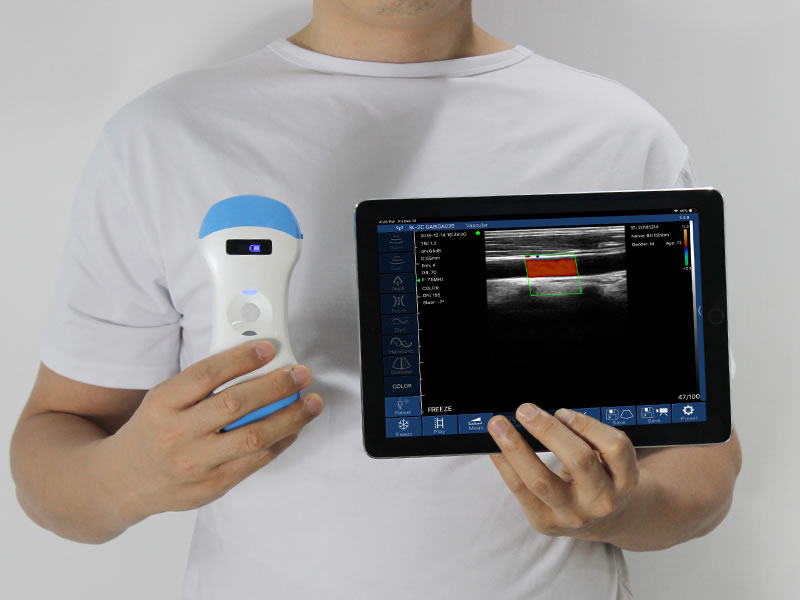
Primary care clinics need to undertake home visits for elderly, disabled and bedridden patients as well as community mobile screening services. Traditional large-scale ultrasound equipment is immovable and cannot adapt to outdoor and home visit scenarios. Portable wireless Doppler ultrasound devices are easy to carry and deploy flexibly, supporting real-time vascular blood flow assessment in non-fixed examination environments. It can meet the screening needs of community health surveys, elderly chronic disease home visits, and grassroots public welfare medical examinations, realizing full-scene coverage of grassroots medical services and further expanding the service scope and professional value of primary clinics.

5. Standardize Grassroots Diagnosis and Reduce Empirical Misjudgment
The diagnosis of many grassroots outpatient diseases relies on the personal experience of clinicians, and the diagnosis results are highly subjective, which is prone to missed diagnosis and misdiagnosis. Portable Doppler ultrasound provides objective, repeatable and visualized blood flow data for clinical diagnosis[6]. It standardizes the judgment basis for grassroots vascular assessment, makes the diagnosis process more standardized and rigorous, and reduces clinical risks caused by empirical deviation. At the same time, the intuitive imaging results are easier to communicate with patients, enhance patients' recognition of grassroots diagnosis, and improve the credibility of primary medical services.
FAQ
Q1: Is portable Doppler ultrasound suitable for long-term popularization in primary care clinics?
A1: Yes. It has low deployment cost, simple operation and low site requirements, perfectly fitting the equipment configuration budget and clinical scenario needs of grassroots medical institutions. It can effectively make up for the lack of professional vascular screening capabilities in primary clinics
A2: It is mainly used for auxiliary screening of peripheral vascular lesions, chronic disease microcirculation disorders, limb perfusion abnormalities, postoperative vascular recovery and other common problems in grassroots clinics, supporting daily outpatient diagnosis and chronic diseasefollow-up management.
Q3: What are the application limitations of portable Doppler ultrasound in primary care?
A3: It is mainly used for bedside preliminary screening and auxiliary judgment, not for replacing high-end large-scale ultrasound equipment for definitive diagnosis of complex and severe lesions. For abnormal screening results, patients need further standardized examination and diagnosis in higher-level hospitals.




 Home
Home Product
 News
News Contact