


3-in-1 Handheld Ultrasound Technology: How SonoStar 9CPL Combines Convex and Linear Array in One Pro
- 2026-09-03
- 48
- Guangzhou Sonostar Technologies Co., Limited
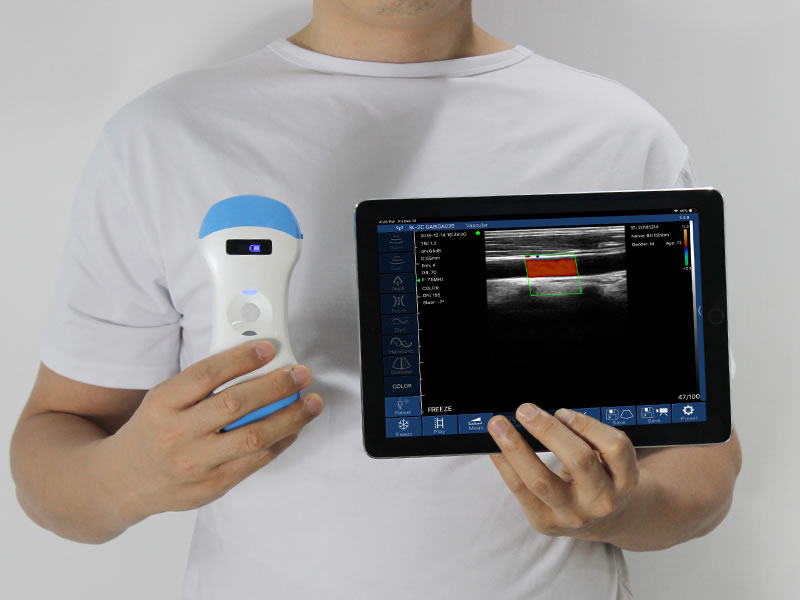
Handheld ultrasound probe selection has long been a pain point for primary care facilities: convex array probes offer deep penetration but limited superficial resolution, while linear array probes deliver high superficial resolution but insufficient penetration depth. Purchasing two separate probes increases cost and creates workflow friction during clinical procedures. The SonoStar 9CPL 3-in-1 probe supports both convex and linear modes in a single device. This article explains the technical principle behind this design, examines its dual-array structure, identifies appropriate clinical scenarios, and outlines objective limitations for procurement reference.
1. Technical Limitations of Traditional Single-Function Probes
Traditional ultrasound probes use a single transducer array design. Convex array probes arrange elements in a curved formation, typically operating at 2–5 MHz with penetration depth of 15–20 cm. They are suitable for abdominal and pelvic organ examination but offer limited resolution for superficial tissues. Linear array probes arrange elements in a straight line, typically operating at 5–12 MHz with high superficial resolution but penetration depth of only 3–5 cm. They are suitable for vascular, nerve, thyroid and musculoskeletal examination.
Because the two probe types differ in physical structure and operating frequency, traditional designs cannot implement both in a single probe. When clinical workflows require both deep and superficial examination, facilities must purchase two probes. Physical probe replacement takes approximately 10–15 seconds, including reconnection and parameter reset, which adds up during busy clinical shifts and increases procurement cost and disinfection workload.
2. Technical Principle of the 9CPL 3-in-1 Probe
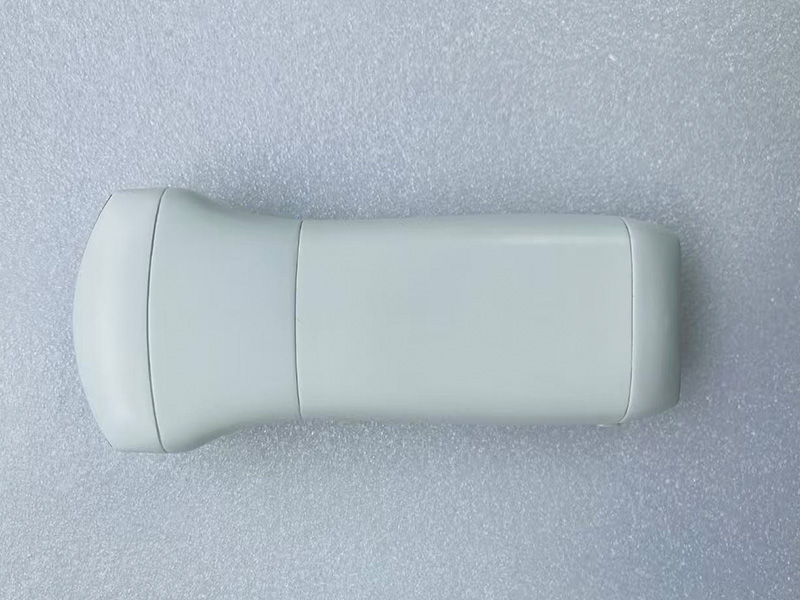
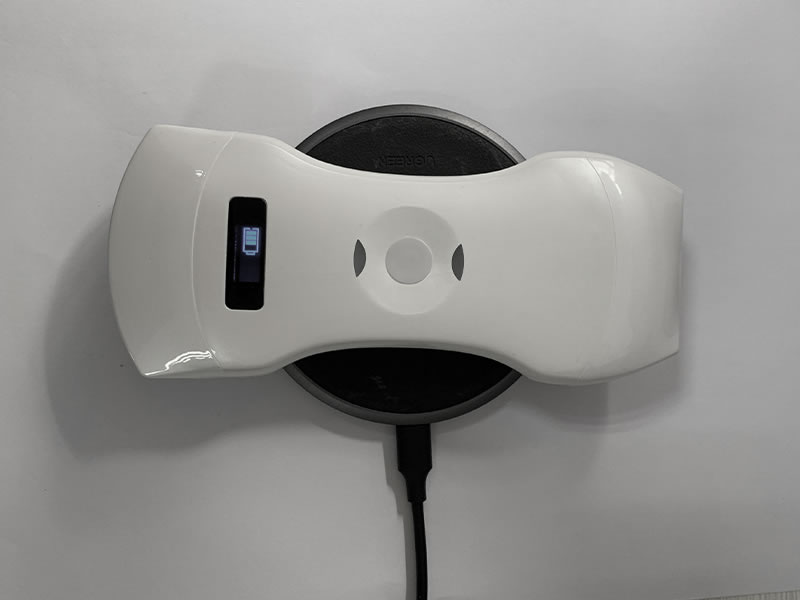
The SonoStar 9CPL adopts a dual-array composite design, integrating both convex and linear transducer arrays within the same probe housing. Users switch between working modes via a physical button on the probe. During mode switching, the device automatically adjusts transmit frequency, focus depth and beamforming parameters, achieving near-instant conversion between convex and linear modes. The switching time is approximately 1–2 seconds, significantly faster than physical probe replacement.
The core technical challenge of this design lies in the spatial layout of the two arrays and circuit sharing. The 9CPL optimizes array arrangement and signal processing circuitry to implement both modes while controlling probe volume. As part of the SonoStar 9-series product line, the 9CPL shares the same replaceable-battery design as other 9-series models, allowing hot-swappable battery replacement for uninterrupted operation during extended outreach or emergency use.
It is important to objectively note that, due to spatial and circuit constraints, the 3-in-1 probe typically has slightly lower channel count and signal-to-noise ratio in single mode compared with a dedicated single-function probe at the same price point. This is an inherent trade-off of integrated design.

3. Clinical Scenarios Where the 9CPL Delivers Value
3.1 Primary Care and General Practice Clinics
Primary care facilities handle a broad mix of conditions, requiring both abdominal preliminary screening and superficial examination. With limited budget and typically only 1–2 ultrasound devices available, the 9CPL covers approximately 80% of common primary care examination needs with a single probe, making it the most cost-effective choice in this setting.
3.2 Emergency Departments and ICUs
Emergency and critical care settings frequently alternate between deep and superficial assessment — for example, abdominal FAST (Focused Assessment with Sonography for Trauma) evaluation followed by vascular puncture guidance. The 9CPL's 1–2 second mode switch is significantly more efficient than physical probe replacement in time-sensitive emergency scenarios.
3.3 Mobile Physical Examination and Outreach Screening
For mobile examination vehicles, rural outreach programs and elderly care facility visits, minimizing the number of devices carried is operationally valuable. The 9CPL completes multiple examination types with one probe, and its replaceable-battery design supports all-day uninterrupted operation without requiring charging access at temporary sites.
3.4 Multi-Department Shared Configuration
In facilities where multiple departments share ultrasound equipment, the 9CPL reduces the need for department-specific probe sets. Departments with high utilization (such as anesthesiology) may still benefit from a dedicated linear probe, but the 9CPL serves as a flexible shared base unit.

4. Objective Limitations of the 3-in-1 Design
The 9CPL is not suitable for every clinical scenario. The following limitations should be considered before procurement:
Single-mode imaging quality: In either convex or linear mode, image quality is slightly lower than a comparably priced dedicated probe. For high-precision diagnostic requirements, a dedicated probe is recommended.
Probe weight: The 9CPL weighs approximately 20–30 grams more than a single-function probe due to the dual-array design. This difference is minor but may be noticeable during prolonged single-hand operation.
Circuit complexity: The integrated design increases circuit complexity. Proper handling, regular disinfection per manufacturer guidelines, and protection from drops are recommended to maintain device longevity.
Not for system-level diagnosis: Like all handheld ultrasound devices, the 9CPL is designed for point-of-care preliminary screening and interventional guidance, not for replacing trolley-based high-end ultrasound in systematic fetal anomaly screening or complex cardiac diagnosis.
5. Procurement Selection Guidance
| Clinical Setting | Recommended Probe Type | Rationale |
|---|---|---|
| Anesthesiology / Pain (nerve blocks only) | Dedicated linear array | Single-purpose superficial imaging, maximum resolution |
| Ultrasound department (abdominal diagnosis only) | Dedicated convex array | Single-purpose deep imaging, maximum penetration |
| Primary care / general practice | 9CPL 3-in-1 | Mixed examination needs, limited budget |
| Emergency / ICU | 9CPL (budget-limited) or convex + linear (full budget) | Rapid mode switching valued; full budget may prefer dedicated probes |
| Mobile examination / outreach | 9CPL 3-in-1 + spare batteries | Minimize devices, all-day operation |
| Multi-department shared base unit | 9CPL 3-in-1 | Flexible shared configuration |
The core selection logic is straightforward: first identify what 80% of your examinations consist of, then select the probe type that matches. Do not overpay for "all-in-one" functionality you will not use, and do not under-provision by selecting a probe that cannot cover your core clinical workflow.
Conclusion
The SonoStar 9CPL 3-in-1 handheld ultrasound implements convex and linear array in one probe through a dual-array composite design, with mode switching in approximately 1–2 seconds. It delivers clear value in primary care, emergency, mobile examination and multi-department shared settings, where mixed deep and superficial examination needs coexist with budget constraints. Its inherent limitations — slightly lower single-mode image quality, marginally higher weight and increased circuit complexity — should be objectively weighed against the workflow efficiency and cost savings it provides.
For facilities with single-purpose clinical workflows, a dedicated probe remains the optimal choice. For facilities requiring both deep and superficial imaging with limited budget or shared-device configurations, the 9CPL offers a practical middle ground with lower total cost of ownership than purchasing two separate probes.
Disclaimer: This article is for medical device technology popularization only and does not constitute procurement advice or medical diagnostic guidance. Specific performance parameters shall be subject to the manufacturer's official technical specifications, and clinical use shall follow relevant diagnostic guidelines and product instructions.
References
[1] American Institute of Ultrasound in Medicine (AIUM). Clinical Utility of Hand-Carried and Pocket-Sized Ultrasound Devices, 2023.
[2] EFSUMB. Position Paper on the Use of Handheld Ultrasound Devices in Clinical Practice, 2019.
[3] World Health Organization. Procurement Guidance for Point-of-Care Ultrasound in Healthcare Facilities, 2025.
[4] National Medical Products Administration. Specifications for Supervision and Administration of Class II Medical Devices.
[5] SonoStar official technical documentation: 9CPL 3-in-1 wireless probe-type handheld color Doppler ultrasound.
- Pre:Handheld Ultrasound for Primary Care and Bedside Use
- Next:No more



 Home
Home Product
 News
News Contact