


Replaceable-Battery Technology in Portable Ultrasound Equipment: A Power Solution for Primary Care a
- 2026-09-07
- 62
- Guangzhou Sonostar Technologies Co., Limited
1. Bottlenecks of Built-In Battery Designs
Most portable ultrasound devices on the market use sealed built-in batteries. This approach simplifies the mechanical structure and improves enclosure sealing, but it creates three practical bottlenecks in clinical deployment.
First, runtime is heavily dependent on the imaging mode. In B-mode grayscale imaging, power consumption is relatively low and most devices run continuously for 4–6 hours. Once color Doppler flow imaging (CDFI) and pulsed-wave (PW) Doppler are enabled, however, actual runtime typically drops to 2–3 hours. A primary care clinic handling 20–30 examinations per day often cannot complete a full shift on a single internal battery.
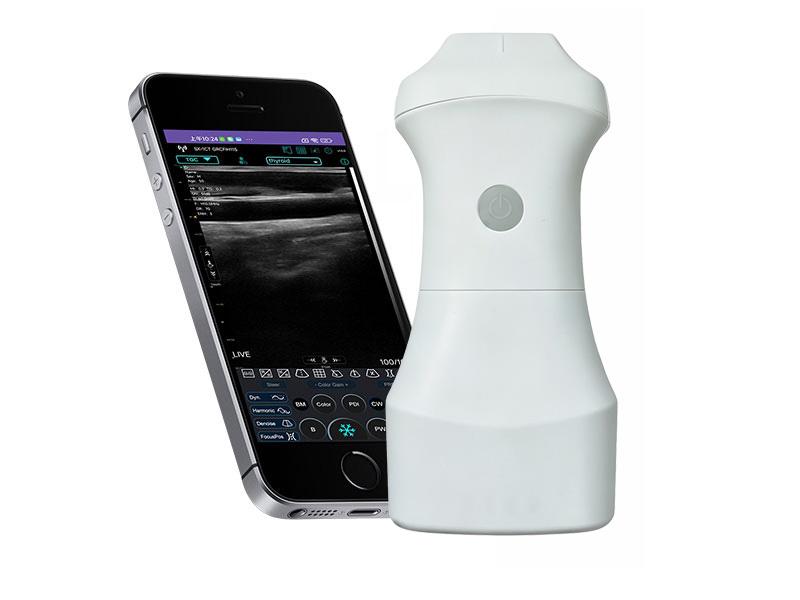
Second, the device becomes unavailable during charging. When a built-in battery is depleted, the unit must be connected to a power source, and fast charging usually takes 1–2 hours. For a small clinic with only one ultrasound device, this charging gap directly reduces examination throughput.
2. How the Hot-Swap Replaceable-Battery Design Works
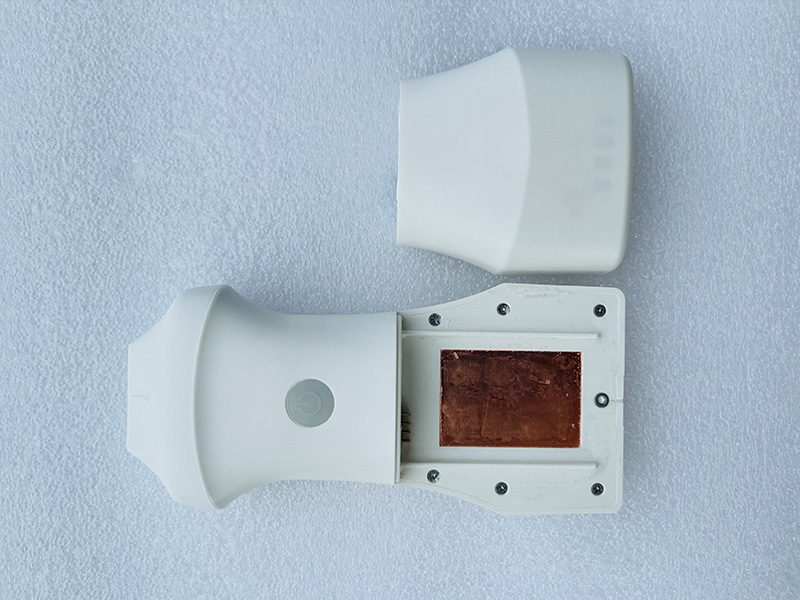
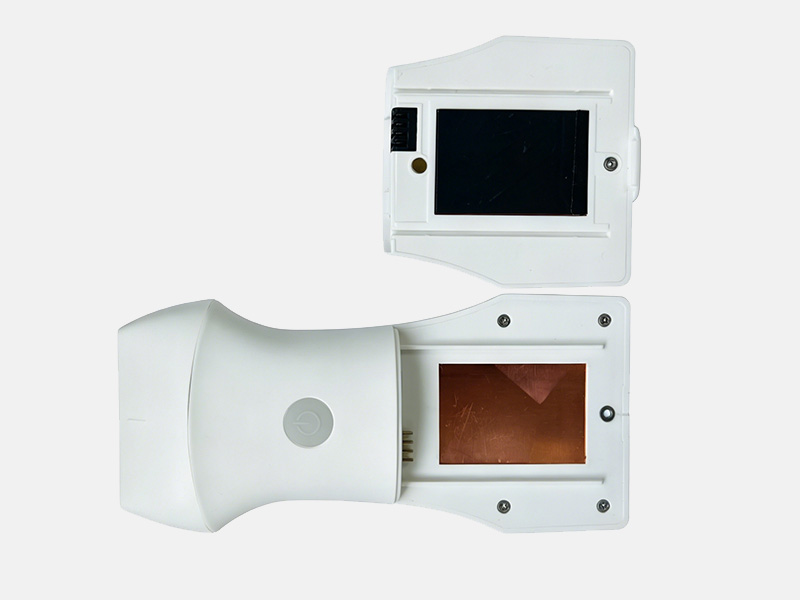
The SonoStar 9-series wireless probe implements a replaceable-battery module at the tail of the probe housing, secured by a latch mechanism. It supports hot swapping — the operator can remove the depleted battery and insert a fresh one while the device remains powered on, with the entire exchange taking approximately 5–10 seconds and no shutdown or reboot.
Two technical challenges must be solved to make this work reliably. The first is contact reliability: frequent insertion and removal requires anti-short-circuit and anti-oxidation contact design to maintain stable power delivery. The second is data protection during the power transition: the brief gap between battery removal and insertion must not corrupt image data being acquired. The 9-series uses an internal supercapacitor to bridge this power gap, combined with software-level data caching, so ongoing examination data remains intact during the swap.
3. Scenarios Where Replaceable Batteries Deliver Clear Value
Township health centers and community clinics: daily outpatient use where a single device serves multiple providers and examination volume is moderate to high
Mobile examination vehicles and rural screening programs: all-day operation across multiple temporary sites without charging infrastructure
Pre-hospital emergency and patient transport: continuous imaging during ambulance transfers and on-site emergency assessment
Elderly care facility home visits: multiple back-to-back examinations across different locations
Multi-department shared configurations: rotating a single probe across departments without waiting for recharge cycles
4. Objective Limitations to Consider
The replaceable-battery approach is not without trade-offs, and these should be evaluated before procurement.
First, batteries are consumable components and spare units must be purchased separately. A single spare battery typically costs several hundred to over a thousand RMB. Equipping a device with three batteries adds approximately 10%–15% to the initial procurement cost.
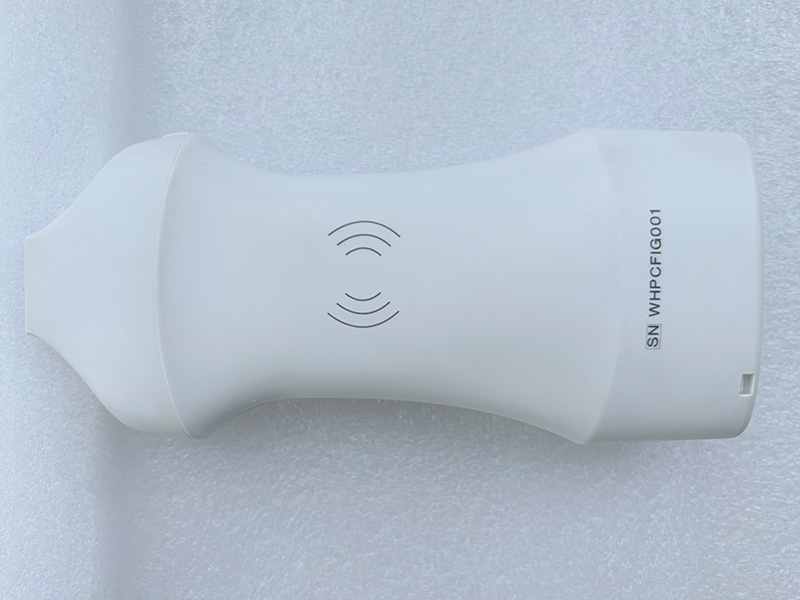
Second, the battery compartment and latch mechanism mean the probe housing is not fully sealed. The 9-series maintains an IP67 ingress protection rating, which supports routine hospital-grade disinfectant wiping, but operation in extreme moisture or immersion environments should follow the product manual's specifications.
5. Conclusion
The replaceable-battery design in portable ultrasound equipment replaces whole-device charging with modular battery swapping, addressing both runtime anxiety and charging downtime in primary care and mobile settings. The SonoStar 9-series achieves 5–10 second uninterrupted hot-swap operation through supercapacitor bridging and data caching, and three rotating batteries support a full day of continuous use. For facilities with limited device inventory and non-fixed examination locations, this design characteristic often delivers more practical value than an additional advanced imaging function that is rarely used.
The selection trade-off is straightforward: if the device operates at a fixed outpatient station with constant power access, a built-in battery may offer a simpler solution. If the device must move frequently between bedside, outreach and shared-department use, the replaceable-battery design provides a noticeably better long-term user experience.
Disclaimer: This article is for medical device technology education only and does not constitute procurement advice or medical diagnostic guidance. Specific performance parameters shall be subject to the manufacturer's official technical specifications, and clinical use shall follow relevant diagnostic guidelines and product instructions.



 Home
Home Product
 News
News Contact