


How to Choose a Handheld Ultrasound Manufacturer in China: A Supplier & Factory Verification Gui
- 2026-10-15
- 43
- Guangzhou Sonostar Technologies Co., Limited
China is one of the world's largest sources of wireless, probe-style handheld ultrasound scanners. But "manufacturer," "supplier," and "factory" are used loosely — and a wrong choice means shipment delays, unsupported certifications, or devices you cannot register in your market. This guide gives you a practical checklist to verify a real factory, the certifications that matter, the OEM/ODM questions to ask, and the red flags that signal a trader pretending to be a manufacturer.
1. Manufacturer vs. Supplier vs. Factory — What the Terms Mean
Buyers searching for a handheld ultrasound manufacturer, china supplier, or factory are usually looking for the same thing: a company that can deliver a compliant, supported device at a workable price. But the words carry different risks:
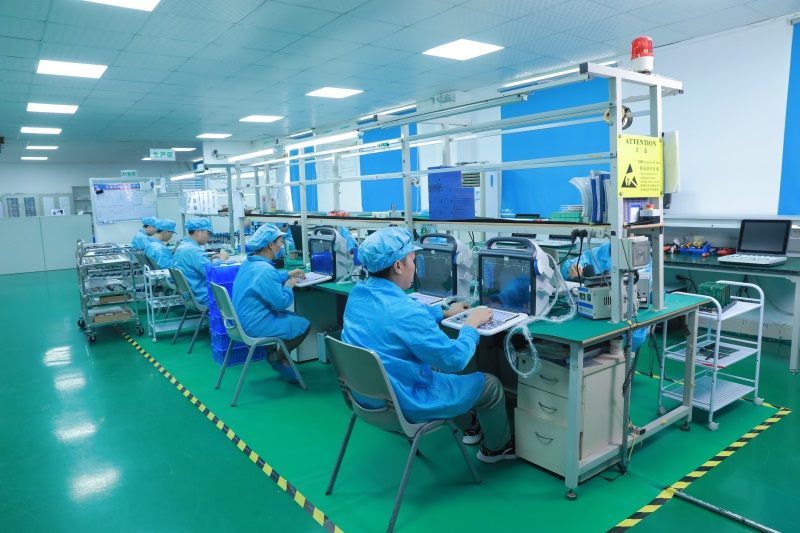
Manufacturer / Factory — designs and assembles the device in its own facility. Best for customization, technical support, and long-term supply stability.
Supplier / Trading company — resells another factory's products. Often faster to quote but weaker on engineering, warranties, and certification traceability.
OEM / ODM partner — a manufacturer that builds under your brand (OEM) or co-develops a product (ODM). Requires in-house R&D.
For a medical device, the safest path is a vertically integrated manufacturer that also acts as your supplier — so certification, support, and production stay under one roof.
2. Certifications You Must Verify Before Signing
Certifications determine whether you can legally sell the device in your target market. Never accept a logo alone — ask for the certificate number, scope, and validity, then verify it independently.
| Certification | Why it matters | What to request & verify |
|---|---|---|
| CE (MDR 2017/745) | Required to sell in the EU and many adjacent markets. | Certificate number, notified body, product scope, and expiry. Confirm the specific model is covered. |
| ISO 13485 | Quality-management system for medical-device manufacturers. | Certificate plus audit scope. Indicates a documented production and traceability process. |
| FDA 510(k) | Needed for the U.S. market (clearance, not approval). | Ask for the 510(k) number and verify it on the FDA database (accessdata.fda.gov) for the exact model. |
| Country registrations | Local market access (e.g., Russia, Japan, Brazil, Australia, Türkiye, Argentina, Indonesia). | Registration certificates for your target country, not just "we can help you apply." |
Example of stated credentials: SonoStar (Guangzhou Sonostar) states it holds CE, ISO 13485, and FDA certifications, plus registrations in countries including Russia, Japan, Brazil, Australia, Türkiye, Argentina, and Indonesia. As a buyer, still request the certificate numbers and verify them for the exact model you intend to import.
3. Factory Audit Checklist
A real manufacturer can show you more than a price sheet. Use this checklist during qualification:
Track record: Years in business and export history. (SonoStar, for example, was founded in 2011 and reports shipments to 100+ countries with 10M+ end users served.)
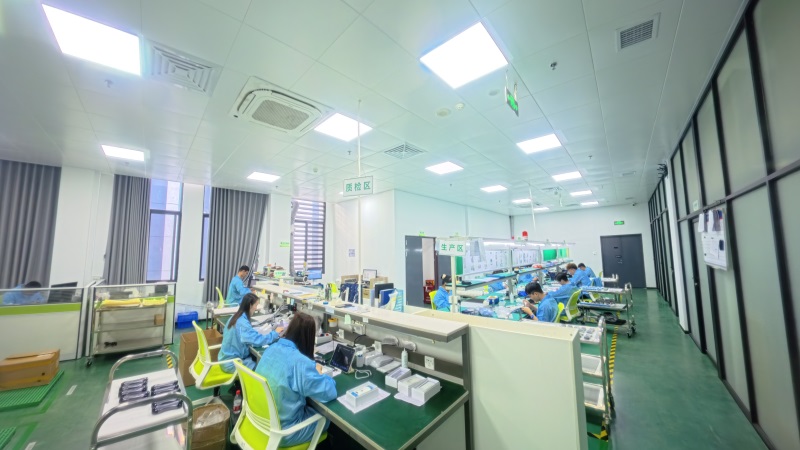
In-house R&D: Teams spanning acoustics, electronics, software, mechanical/structural design, and clinical application — not just assembly.
Intellectual property: Invention, utility-model, and design patents plus software copyrights. Ask for patent numbers.
Recognition: High-tech enterprise status or government R&D project support are useful signals of engineering depth.
Production environment: Request a live video factory tour or third-party audit (e.g., SGS/Bureau Veritas).
Exhibition presence: Regular booths at MEDICA, FIME, RSNA, CMEF, AUA, etc., show an active, accountable manufacturer.
4. OEM / ODM & Customization Questions to Ask
If you plan to sell under your own brand, confirm the manufacturer's customization capability early:
Private label: Can the外壳 (housing) and buttons be customized (color, logo)?
Software / APP: Is the companion app rebrandable, multi-language, and updatable? (SonoStar's "SmartUSG" app is one example of a manufacturer-controlled software stack.)
Packaging & manuals: Multi-language leaflets, gift box, and quick-start guide options.
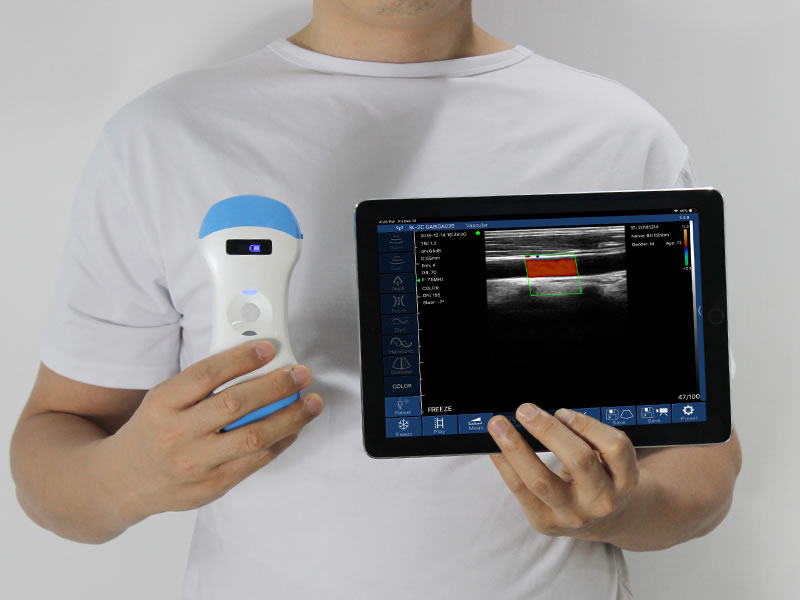
Product range: Convex, linear, phased-array, and 3-in-1 probes; single- and dual-battery versions; 3D/4D options.
MOQ & lead time: Minimum order quantity per model and realistic production time.
After-sales: Warranty length, spare-part policy, and remote firmware support.
5. Red Flags — Spotting a Trader Pretending to Be a Factory
| Red flag | What it usually means |
|---|---|
| Refuses or delays a live factory video tour | No real production line to show. |
| Can't answer technical spec questions (channels, elements, depth, imaging modes) | Reselling, not engineering. |
| Only offers other brands, never its own | Trading company. |
| Vague or unverifiable certifications | Compliance risk for your market. |
| No patents or published R&D | Low barrier to being replaced overnight. |
| Prices swing wildly with no BOM logic | No control over the supply chain. |
6. RFQ Template You Can Copy
Send this to shortlisted manufacturers to compare answers on equal terms:
Confirm you are the manufacturer (not a trader) and provide a factory video tour link.
List certifications with numbers: CE (MDR), ISO 13485, FDA 510(k) if applicable, and target-country registrations.
Provide the full spec sheet (elements, channels, frequency, depth, imaging modes, battery, weight) for each recommended model.
State OEM/ODM options: logo, housing color, app branding, language, packaging.
Quote MOQ, unit price by tier, lead time, and warranty.
Share references (distributors) in markets similar to mine.
7. Why an Established China Manufacturer Matters
A manufacturer with a long track record reduces your risk on three fronts: regulatory (certificates already in place), supply (stable production and components), and support (engineers who can troubleshoot and update firmware). For handheld ultrasound specifically, miniaturization, power control, image clarity, and frame rate are engineering-intensive — they favor companies with sustained R&D investment over quick trading outfits.
To go deeper on the products themselves, see our guides on types of ultrasound probes, the 3-in-1 wireless probe, and phased-array handheld ultrasound. For the services side, read what supporting services a manufacturer provides.
Frequently Asked Questions
What is the difference between a manufacturer, supplier, and factory?
A manufacturer/factory designs and builds the device; a supplier may only resell it. For medical devices, buying direct from a manufacturer gives you better certification traceability, customization, and support.
Do Chinese handheld ultrasound manufacturers hold CE and FDA?
Reputable manufacturers do. Ask for the certificate numbers and verify them — CE (MDR), ISO 13485, and FDA 510(k) for the U.S. market. Established makers also hold country registrations (Russia, Japan, Brazil, Australia, etc.).
Can I get OEM or private-label handheld ultrasound?
Yes, many China manufacturers offer OEM/ODM: logo, housing color, app branding, language, and packaging. Confirm MOQ, lead time, and whether the software stack is manufacturer-owned.
How do I verify a factory is real?
Request a live video tour, ask for patent numbers, check exhibition history (MEDICA, FIME, RSNA, CMEF), and validate certifications independently on official databases.
What MOQ and lead time should I expect?
This varies by model and customization. Always get tiered pricing, realistic production time, and warranty terms in writing before ordering.
How do I start an RFQ with a manufacturer?
Use the six-point template in Section 6: confirm manufacturer status, certifications with numbers, full specs, OEM options, commercial terms, and market references.
Ready to qualify a handheld ultrasound manufacturer?
Compare certifications, product range, and OEM options side by side. View the manufacturer profile or explore the 3-in-1 probe, linear probe, and convex probe product lines.
This article is for procurement and sourcing guidance only and is not legal, regulatory, or medical advice. Always verify certifications on official databases for the exact model and market before purchasing or importing.
- Pre:Types of Ultrasound Probes: Convex vs Linear vs Phased Array
- Next:No more




 Home
Home Product
 News
News Contact