


Wireless Probe Mini Ultrasound: Is Its Image Clarity Sufficient for Clinical Use?
- 2026-07-30
- 1058
- Guangzhou Sonostar Technologies Co., Limited
When primary medical institutions and physical examination centers select wireless probe mini ultrasound systems, their top concern is whether the image clarity meets practical clinical needs. Sonostar, a developer focused on handheld ultrasound technology, offers a full lineup of wireless mini ultrasound models with a range of probe specifications, including convex array and linear array variants. These compact, portable devices do not deliver uniform imaging performance; their clarity depends on hardware configurations, probe type, and the specific clinical scenario of use.
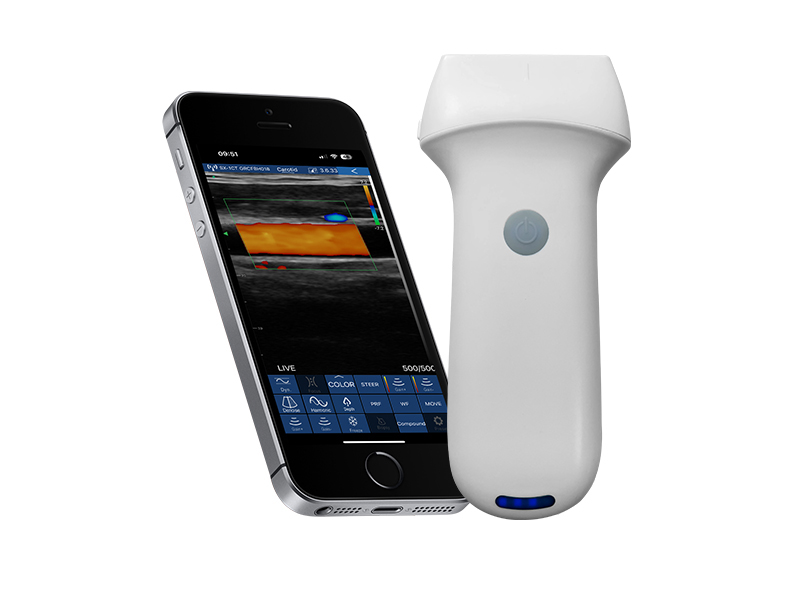
Basic Imaging Configurations for Reliable Routine Screening Clarity
Take Sonostar’s product range as an example. Its full line of wireless mini ultrasound systems is equipped with a complete foundational ultrasound imaging suite, including standard modes such as B-mode imaging, color Doppler, and pulsed wave Doppler. Built-in image optimization features include gain adjustment, harmonic imaging, and multi-level noise reduction.
Some high-end models adopt a 64-channel imaging architecture paired with digital beamforming technology to reduce image noise. This delivers clearer visualization of organ boundaries and blood flow direction, providing stable and reliable image resolution for routine screening scenarios.
2. Probe Type Drives Clarity Differences Across Anatomical Sites
Different probe types have distinct resolution characteristics, resulting in varied clarity performance for different body parts:
Convex array probes are suited for deep scanning of the abdomen and pelvis. They deliver clear delineation of organ layers and can identify basic findings such as effusion and cysts.
Linear array and ultra-high frequency linear array probes are optimized for superficial structures, offering higher detail resolution for the thyroid, breast, and subcutaneous soft tissues.
Endocavitary and rectal biplane probes sit close to target organs, providing more intuitive visualization of local tissue details.
4D-capable models produce volumetric images, offering more intuitive visualization for scenarios such as obstetric examinations.

3. Clarity Adequacy Evaluated by Clinical Scenario
For scenarios including routine physical exams in community clinics, rapid bedside triage in emergency settings, mobile rural screening, and postoperative bedside follow-up, these devices deliver sufficient clarity for basic screening needs. They support basic measurement functions and image storage, fitting well into daily clinical decision support and medical record archiving workflows.
For high-precision diagnostic scenarios such as fetal systematic anomaly screening, complex cardiac lesion assessment, and accurate identification of tiny tumors, the resolution of these devices lags behind large cart-based ultrasound systems due to probe size and hardware limitations. Their clarity is not adequate to support advanced diagnostic procedures, and they are only suitable as tools for preliminary screening and patient triage. All clinical diagnoses must be comprehensively determined by licensed physicians.
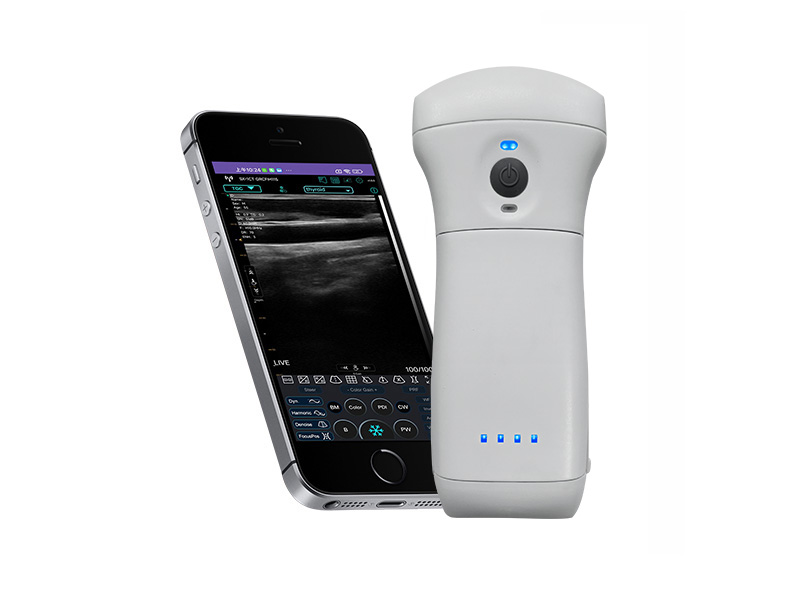
4. Proper Operation Techniques Further Optimize Clarity
In daily use, image clarity can be further improved through standard operation practices: selecting site-specific preset parameters, adjusting segmental gain to reduce artifacts, enabling harmonic mode, and activating noise reduction functions. These adjustments help the device better adapt to the requirements of specific examinations.
Summary
Overall, wireless probe mini ultrasound systems offer sufficient image clarity for routine primary care screening, emergency rapid assessment, and mobile physical examination scenarios. However, they are positioned as auxiliary tools for preliminary screening and cannot fully replace large cart-based ultrasound systems for precise diagnostic work. Medical institutions can select appropriate models based on their own clinical scenarios, and all clinical applications must follow the professional judgment of licensed physicians.




 Home
Home Product
 News
News Contact